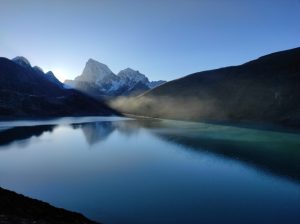
In the heart of the Khumbu region and surrounded by towering peaks of the Himalayas, Gokyo Lake and Gokyo Ri stand as a hidden gem, transcending the boundaries of natural beauty. This mystical destination, situated at an elevation of approximately 4,700 meters (15,400 feet), draws trekkers and spiritual seekers alike. The pristine glacial lake and the imposing peak of Gokyo Ri create an ethereal landscape resonating with profound spiritual energy.
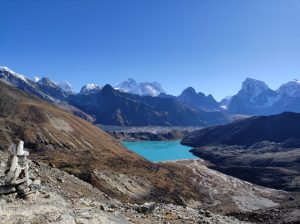
Gokyo Lake and Gokyo Ri are well-known and revered for their natural beauty, especially in the context of trekking and mountaineering in the Everest region of Nepal. Situated at high altitudes in the Gokyo Valley, near the base of Cho Oyu, the sixth-highest mountain in the world, Gokyo Lake forms a series of glacial lakes. These lakes are renowned for their stunning turquoise color and are surrounded by breathtaking mountainous surroundings. Gokyo Ri is a nearby peak that offers a panoramic view of the Himalayas, including Everest, Lhotse, Makalu, and Cho Oyu.
While the region is culturally rich, and Buddhism plays a significant role in the lives of the local people who inhabit the area, Gokyo Lake and Gokyo Ri themselves do not hold specific religious significance. However, the entire Everest region is dotted with monasteries, stupas, and other religious sites that are integral to the local culture.
Trekking to Gokyo Lake and Gokyo Ri is often considered a spiritual experience for many, as the journey takes travelers through picturesque landscapes, traditional villages, and encounters with the local Buddhist culture. Travelers may visit monasteries along the way, such as the one at Thame, which is known for its religious and cultural importance.
 |
 |
 |
 |
 |
GOKYO ITINERARIES
Deeply rooted in the cultural fabric of the local community, the spiritual significance of Gokyo Ri is evident. The area, surrounded by towering peaks and adorned with fluttering prayer flags, is considered sacred ground. Gokyo Lake, in particular, holds a revered place in the hearts of locals. They circumambulate its pristine waters as a form of pilgrimage, turning the journey into more than a physical ascent. It becomes a symbolic climb towards spiritual heights, where the thin air is infused with a sense of transcendence. The Gokyo Lake and Gokyo Ri, thus, both hold spiritual significance to not only the trekkers beyond the borders, but also the local guides and porters who take an opportunity to worship the deity there.
The Gokyo Trek is a popular trekking route in the Everest region of Nepal, known for its stunning scenery, pristine glacial lakes, and spectacular mountain views.
Here is a general outline of the Gokyo Trek route:
- Fly to Lukla: The trek typically begins with a flight from Kathmandu to Lukla. Lukla is a small mountain town with a challenging airport that serves as the gateway to the Everest region.
- Trek to Phakding (Day 1): Start trekking from Lukla to Phakding. The trail descends through forests and follows the Dudh Koshi River.
- Trek to Namche Bazaar (Day 2-3): Continue trekking to Namche Bazaar, a bustling town and a major hub for trekkers. It offers acclimatization rest days and provides an opportunity to explore the local culture.
- Trek to Dole (Day 4-5): Move further up the valley, passing through small villages like Mong and Phortse. The trail offers glimpses of Ama Dablam and other peaks.
- Trek to Machhermo (Day 6): The trek continues to the village of Machhermo, situated along the Dudh Koshi River. The scenery becomes more alpine as you gain altitude.
- Trek to Gokyo (Day 7-8): Reach the beautiful Gokyo Valley, where you’ll find a series of glacial lakes. Explore Gokyo village and hike to Gokyo Ri for panoramic views of Cho Oyu, Everest, Lhotse, and Makalu.
- Trek to Dole or Namche Bazaar (Day 9-10): Descend back down the valley, passing through Machhermo and other villages. Depending on your itinerary, you may stop at Dole or continue to Namche Bazaar.
- Trek back to Lukla (Day 11-12): Follow the trail back to Lukla, passing through familiar villages and enjoying the scenery in reverse.
- Fly back to Kathmandu: Conclude the trek with a flight from Lukla back to Kathmandu.
The number of days and specific itinerary may vary depending on the trekking agency and individual preferences. As and if required, trekkers can change an itinerary that also includes a visit to the EBC. Additionally, acclimatization is crucial during the trek to avoid altitude-related issues, so most itineraries include rest days in Namche Bazaar and/or Gokyo. Trekkers should also be prepared for varying weather conditions and be physically fit for the challenging terrain. Always check for updated information and consider hiring a local guide or joining a guided trek for a safer and more enjoyable experience.
PACK FOR GOKYO
Packing for a trek to Gokyo requires careful consideration of the varied terrain, high altitude, and unpredictable weather conditions. Here’s a general packing list to help you prepare for the Gokyo Trek:
Clothing:
- Moisture-Wicking Base Layers: Synthetic or merino wool base layers to manage sweat and keep you warm.
- Insulating Layers: Fleece or down jackets for added warmth in colder conditions.
- Weatherproof Jacket: A waterproof and windproof jacket to protect against rain, snow, and wind.
- Trekking Pants: Lightweight, quick-drying pants for comfort during the trek.
- Convertible Pants: Pants that can be converted into shorts for variable temperatures.
- Trekking Shirts: Moisture-wicking, long-sleeved shirts for sun protection.
- Headwear: Hat for sun protection and warmth, and a beanie for cold nights.
- Gloves: Lightweight gloves for lower altitudes and warmer weather, and insulated, waterproof gloves for higher altitudes.
- Hiking Boots: Sturdy, waterproof hiking boots with good ankle support.
- Socks: Moisture-wicking socks to prevent blisters.
Gear:
- Backpack: A comfortable, well-fitted backpack for carrying your essentials.
- Sleeping Bag: A warm, season-appropriate sleeping bag suitable for high altitudes.
- Trekking Poles: Adjustable trekking poles for stability and support during descents.
- Headlamp/Flashlight: A reliable light source with extra batteries.
- Sunglasses: UV-protective sunglasses to shield your eyes from the strong mountain sun.
- Water Bottle or Hydration System: Stay hydrated with a reusable water bottle or hydration bladder.
- Snacks: High-energy snacks like trail mix, energy bars, and chocolate.
- Personal First Aid Kit: Include medications, blister treatment, and basic first aid supplies.
- Toiletries: Travel-sized toiletries, including sunscreen, lip balm, and wet wipes.
- Towel: A compact, quick-drying towel for personal hygiene.
Miscellaneous:
- Camera: Capture the breathtaking scenery with a camera or smartphone.
- Power Bank: Keep your devices charged with a portable power bank.
- Map and Guidebook: Carry a detailed map and trekking guidebook.
- Documents: Passport, permits, and any necessary travel documents.
- Cash: Carry Nepalese Rupees for small purchases in local villages.
- Duffle Bag: Pack your trekking gear in a durable duffle bag for the flight to Lukla.
Remember to adjust the packing list based on the specific season and weather conditions during your trek. It’s also a good idea to check the weather forecast and trail conditions before you start your journey. Additionally, hiring a local guide can enhance your trekking experience and provide valuable insights into the region.

Gokyo Ri: A Summit of Enlightenment
Gokyo Ri, a majestic peak, rises to an elevation of 5,360 meters (17,586 feet). It goes beyond being merely a vantage point for panoramic views of the Himalayan giants – Everest, Lhotse, Makalu, and Cho Oyu. Instead, it stands as a symbolic summit, a spiritual peak that beckons trekkers to embark on a journey beyond the physical. Ascending Gokyo Ri isn’t just about conquering heights; it’s a pilgrimage towards enlightenment, a quest for spiritual fulfillment amidst the awe-inspiring grandeur of the Himalayan range.
Gokyo Ri Sunrise:
Witnessing the sunrise from the summit of Gokyo Ri is one of the most enchanting experiences in the region. The first rays of sunlight gently kiss the snow-capped peaks, bathing the landscape in hues of pink and gold. This surreal moment, high above the world, is more than a visual spectacle—it’s a spiritual awakening. Trekkers and pilgrims alike become immersed in a profound connection with nature and the divine, experiencing a communion that transcends words.
Cultural Encounters:
Beyond its natural splendor, Gokyo provides cultural encounters. Teahouses along the trek offer shelter, sustenance, and glimpses into local hospitality. Traditional meals shared around communal tables foster camaraderie between trekkers and locals.
The monasteries scattered throughout the nearby villages add another layer to the spiritual tapestry of Gokyo. These sanctuaries are not only architectural marvels but also centers of religious practice and cultural preservation. The resonating chants and intricate murals within these monastic walls contribute to the overall spiritual ambiance of the region.
In conclusion, Gokyo Lake and Gokyo Ri are not mere geographical landmarks; they are portals to a spiritual odyssey in the Himalayas. The pristine lake and the towering peak create an environment where the physical and spiritual realms intersect. Whether one undertakes the trek for the challenge, the panoramic views, or the spiritual connection, Gokyo remains a destination that transcends the ordinary. Moreover, leaving an indelible mark on the souls of all who venture into its serene embrace. It is a place where the earth meets the sky, and the human spirit finds itself amidst the grandeur of the Himalayan peaks.

Fun Facts About Gokyo
- Gokyo is renowned for its series of six glacial lakes, with the main Gokyo Lake being the third one in the sequence. The lakes are known for their stunning turquoise color, surrounded by snow-capped peaks.
- Gokyo Ri is a peak located above the village of Gokyo, offering one of the most breathtaking panoramic views of the Everest region. Trekkers often make the ascent to Gokyo Ri to witness the sunrise over the Himalayas, providing a mesmerizing spectacle.
- The Gokyo Trek often includes crossing the Renjo La Pass, a high-altitude mountain pass that connects the Gokyo Valley with the Thame Valley. The pass provides stunning views of Everest, Cho Oyu, and other surrounding peaks.
- The trek to Gokyo takes you through several traditional villages, offering opportunities to experience the local culture and hospitality. Villages like Namche Bazaar, Dole, and Machhermo provide insights into local lifestyle and traditions.
- Gokyo is located in close proximity to Cho Oyu, the sixth-highest mountain in the world. Cho Oyu is a popular peak for mountaineers and can be seen prominently during the trek.
- Gokyo is a small, picturesque village situated near the third Gokyo Lake. The village has teahouses, lodges, and basic facilities for trekkers. The peaceful setting of Gokyo adds to the charm of the trek.
- Gokyo is at a high altitude, and trekkers should be aware of the challenges associated with altitude sickness. Acclimatization days in Namche Bazaar and Gokyo are crucial for adjusting to the thin air.
- Along the trek, you may visit monasteries such as the Thame Monastery, adding a spiritual and cultural dimension to the journey.
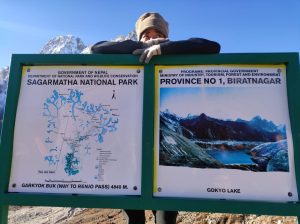
- The Gokyo region is part of the Sagarmatha National Park and is designated as the Gokyo Lakes Conservation Area, emphasizing the importance of preserving its unique natural and cultural heritage.

While Gokyo Lake and Gokyo Ri offer awe-inspiring natural beauty, trekkers must exercise caution and adhere to safety guidelines to avoid accidents and ensure a secure journey in this high-altitude region. Here are some things to strictly avoid and a discussion of potential dangers:
Avoid Potential Dangers
- Ignoring Acclimatization Guidelines:
– One of the primary dangers in the Gokyo region is altitude sickness. Avoid ascending too quickly and follow acclimatization guidelines. Take the recommended rest days in Namche Bazaar and Gokyo to allow your body to adjust to the high altitude gradually.
- Underestimating Weather Conditions:
– Weather in the Himalayas can be unpredictable. Avoid trekking during adverse weather conditions, especially in the high-altitude areas. Sudden changes in weather, such as snowstorms or fog, can pose risks, so it’s crucial to stay informed about the forecast and adjust your plans accordingly.
- Ignoring Signs of Altitude Sickness:
– Symptoms of altitude sickness include headaches, nausea, and dizziness. Ignoring these signs can lead to more severe conditions such as high-altitude pulmonary edema (HAPE) or high-altitude cerebral edema (HACE). If you experience symptoms, descend to lower altitudes immediately and seek medical attention.
- Neglecting Proper Gear:
– In the high-altitude and variable conditions of Gokyo, having the right gear is crucial. Avoid neglecting essential items like a reliable pair of waterproof, insulated gloves, warm clothing, and proper trekking boots with ankle support. Inadequate gear can contribute to discomfort and increase the risk of accidents.
- Disregarding Trail Safety:
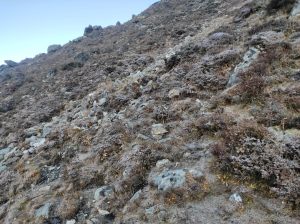
– The trails around Gokyo can be challenging, with steep ascents and descents. Avoid taking unnecessary risks, especially on narrow or uneven paths. Use trekking poles for stability and take your time to navigate tricky sections carefully.
- Ignoring Local Advice:
– Local guides and experienced trekkers are familiar with the conditions and challenges of the Gokyo region. Avoid disregarding their advice, especially concerning weather conditions, trail safety, and acclimatization. They can provide valuable insights that contribute to a safer trekking experience.
- Overlooking Hydration:
– Dehydration can exacerbate the effects of high altitude. Avoid neglecting proper hydration by carrying an adequate supply of water and regularly replenishing fluids. Altitude can increase the risk of dehydration, making it essential to be proactive in maintaining hydration levels.
- Venturing Off Marked Trails:
– Gokyo has well-established trekking routes. Avoid venturing off marked trails, as straying can lead to encountering dangerous terrain, avalanches, or becoming lost. Stick to established paths to minimize risks.
Conclusion
In conclusion, Gokyo Lake and Gokyo Ri are not mere geographical landmarks; they are portals to a spiritual odyssey in the Himalayas. The pristine lake and the towering peak create an environment where the physical and spiritual realms intersect. Whether one undertakes the trek for the challenge, the panoramic views, or the spiritual connection, Gokyo remains a destination that transcends the ordinary. Moreover, leaving an indelible mark on the souls of all who venture into its serene embrace. It is a place where the earth meets the sky, and the human spirit finds itself amidst the grandeur of the Himalayan peaks.
While the Gokyo region offers incredible trekking opportunities, understanding and respecting the potential dangers is crucial for a safe and enjoyable experience. Always prioritize safety, be prepared, and stay informed about current conditions to mitigate risks effectively.
Find more of our spiritually enlighting blogs here.
Well-known brands such as The North Face, Patagonia, La Sportiva, Osprey, Black Diamond, Solomon, and others manufacture and offer some of the most popular trekking backpack items. If you’re considering updating your trekking gear, these stores offer a range of options at affordable prices. So, explore their selections and gear up for your next adventure with confidence!